•  
Unexploded bomb defused in Miyazaki

Unexploded bomb defused in Miyazaki

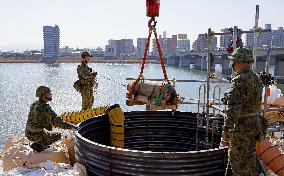
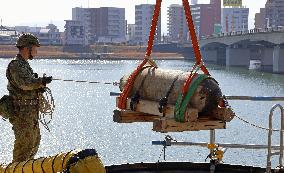
An unexploded bomb is pictured after being defused by the Oyodo River in the southwestern Japan city of Miyazaki on Jan. 17, 2026. The bomb was found in the river on Jan. 5 during excavation work.

  •  
Unexploded bomb defused in Miyazaki

Unexploded bomb defused in Miyazaki

An unexploded bomb is pictured after being defused by the Oyodo River in the southwestern Japan city of Miyazaki on Jan. 17, 2026. The bomb was found in the river on Jan. 5 during excavation work.

  •  
World Longest Underwater Road Tunnel Construction

World Longest Underwater Road Tunnel Construction

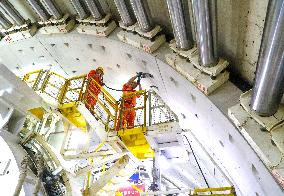
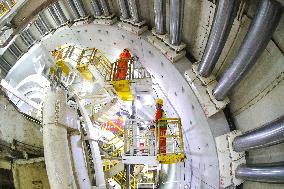
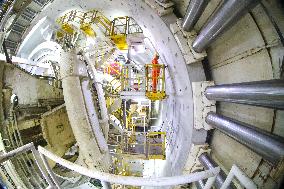
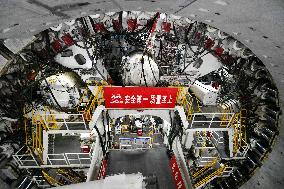
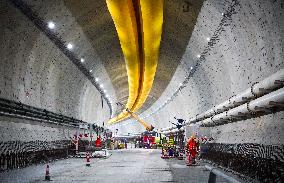
QINGDAO, CHINA - DECEMBER 15, 2025 - At the excavation site of the "Haitian" shield tunneling machine, the builders are carrying out bolt tightening work on the pipe segments in Qingdao, Shandong Province, China on December 15, 2025. The tunnel is 17.48 kilometers long, with a sea section of 9.95 kilometers, making it the longest underwater road tunnel currently under construction in the world.

  •  
World Longest Underwater Road Tunnel Construction

World Longest Underwater Road Tunnel Construction

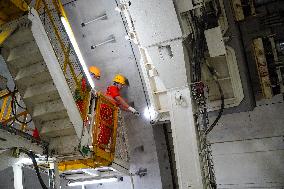
QINGDAO, CHINA - DECEMBER 15, 2025 - At the excavation site of the "Haitian" shield tunneling machine, the builders are carrying out bolt tightening work on the pipe segments in Qingdao, Shandong Province, China on December 15, 2025. The tunnel is 17.48 kilometers long, with a sea section of 9.95 kilometers, making it the longest underwater road tunnel currently under construction in the world.

  •  
World Longest Underwater Road Tunnel Construction

World Longest Underwater Road Tunnel Construction

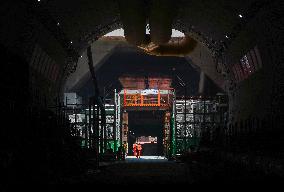
QINGDAO, CHINA - DECEMBER 15, 2025 - At the excavation site of the "Haitian" shield tunneling machine, the builders are carrying out bolt tightening work on the pipe segments in Qingdao, Shandong Province, China on December 15, 2025. The tunnel is 17.48 kilometers long, with a sea section of 9.95 kilometers, making it the longest underwater road tunnel currently under construction in the world.

  •  
Nearly 80 skeletons discovered in central Tartu

Nearly 80 skeletons discovered in central Tartu

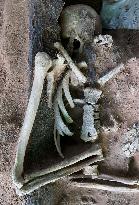
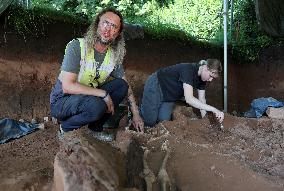
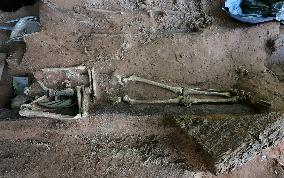
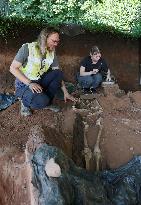
17.07.2025, Tartu. During excavation work at Lillemäe in the center of Tartu, nearly 80 skeletons and the belongings that were buried with them have been unearthed. The skeletons are mostly 18th-century burials, while some medieval burials have also been discovered. Photo Sille Annuk, Tartu Postimees

  •  
Nearly 80 skeletons discovered in central Tartu

Nearly 80 skeletons discovered in central Tartu

17.07.2025, Tartu. During excavation work at Lillemäe in the center of Tartu, nearly 80 skeletons and the belongings that were buried with them have been unearthed. The skeletons are mostly 18th-century burials, while some medieval burials have also been discovered. Photo Sille Annuk, Tartu Postimees

  •  
Nearly 80 skeletons discovered in central Tartu

Nearly 80 skeletons discovered in central Tartu

17.07.2025, Tartu. During excavation work at Lillemäe in the center of Tartu, nearly 80 skeletons and the belongings that were buried with them have been unearthed. The skeletons are mostly 18th-century burials, while some medieval burials have also been discovered. Photo Sille Annuk, Tartu Postimees

  •  
Nearly 80 skeletons discovered in central Tartu

Nearly 80 skeletons discovered in central Tartu

17.07.2025, Tartu. During excavation work at Lillemäe in the center of Tartu, nearly 80 skeletons and the belongings that were buried with them have been unearthed. The skeletons are mostly 18th-century burials, while some medieval burials have also been discovered. Photo Sille Annuk, Tartu Postimees

  •  
Yellow River Tunnel Construction - China

Yellow River Tunnel Construction - China

A tunnel boring machine TBM) works at the construction site of the Yellow River tunnel on Huanggang Road in Jinan, east China's Shandong Province, June 22, 2025. The excavation work of the Yellow River section of the Huanggang Road Yellow River tunnel was completed on Sunday, marking a breakthrough in the construction of the tunnel project. The 5,755-meter-long tunnel, with 3,290 meters excavated by a 17.5-meter diameter TBM, is the largest underwater TBM tunnel currently under construction in the world. Photo by Xu Suhui/Xinhua/ABACAPRESS.COM

  •  
Yellow River Tunnel Construction - China

Yellow River Tunnel Construction - China

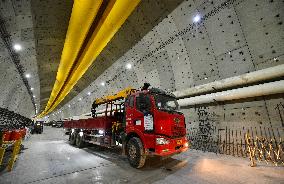
A truck runs at the construction site of the Yellow River tunnel on Huanggang Road in Jinan, east China's Shandong Province, June 22, 2025. The excavation work of the Yellow River section of the Huanggang Road Yellow River tunnel was completed on Sunday, marking a breakthrough in the construction of the tunnel project. The 5,755-meter-long tunnel, with 3,290 meters excavated by a 17.5-meter diameter TBM, is the largest underwater TBM tunnel currently under construction in the world. Photo by Xu Suhui/Xinhua/ABACAPRESS.COM

  •  
Yellow River Tunnel Construction - China

Yellow River Tunnel Construction - China

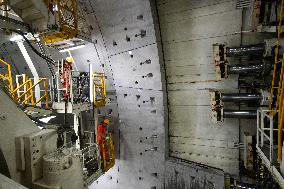
Staff workers work at the construction site of the Yellow River tunnel on Huanggang Road in Jinan, east China's Shandong Province, June 22, 2025. The excavation work of the Yellow River section of the Huanggang Road Yellow River tunnel was completed on Sunday, marking a breakthrough in the construction of the tunnel project. The 5,755-meter-long tunnel, with 3,290 meters excavated by a 17.5-meter diameter TBM, is the largest underwater TBM tunnel currently under construction in the world. Photo by Xu Suhui/Xinhua/ABACAPRESS.COM

  •  
Yellow River Tunnel Construction - China

Yellow River Tunnel Construction - China

Staff workers work at the construction site of the Yellow River tunnel on Huanggang Road in Jinan, east China's Shandong Province, June 22, 2025. The excavation work of the Yellow River section of the Huanggang Road Yellow River tunnel was completed on Sunday, marking a breakthrough in the construction of the tunnel project. The 5,755-meter-long tunnel, with 3,290 meters excavated by a 17.5-meter diameter TBM, is the largest underwater TBM tunnel currently under construction in the world. Photo by Xu Suhui/Xinhua/ABACAPRESS.COM

  •  
Yellow River Tunnel Construction - China

Yellow River Tunnel Construction - China

Staff workers work at the construction site of the Yellow River tunnel on Huanggang Road in Jinan, east China's Shandong Province, June 22, 2025. The excavation work of the Yellow River section of the Huanggang Road Yellow River tunnel was completed on Sunday, marking a breakthrough in the construction of the tunnel project. The 5,755-meter-long tunnel, with 3,290 meters excavated by a 17.5-meter diameter TBM, is the largest underwater TBM tunnel currently under construction in the world. Photo by Xu Suhui/Xinhua/ABACAPRESS.COM

  •  
Yellow River Tunnel Construction - China

Yellow River Tunnel Construction - China

Staff workers are pictured at the construction site of the Yellow River tunnel on Huanggang Road in Jinan, east China's Shandong Province, June 22, 2025. The excavation work of the Yellow River section of the Huanggang Road Yellow River tunnel was completed on Sunday, marking a breakthrough in the construction of the tunnel project. The 5,755-meter-long tunnel, with 3,290 meters excavated by a 17.5-meter diameter TBM, is the largest underwater TBM tunnel currently under construction in the world. Photo by Xu Suhui/Xinhua/ABACAPRESS.COM

  •  
(Int'l Exchange)CHINA-HUBEI-WUHAN-SUMMER SCHOOL-ARCHAEOLOGY-PROGRAM (CN)

(Int'l Exchange)CHINA-HUBEI-WUHAN-SUMMER SCHOOL-ARCHAEOLOGY-PROGRAM (CN)

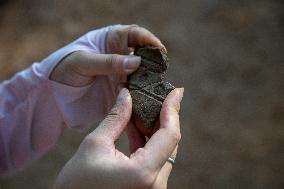
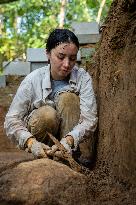
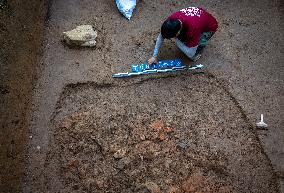
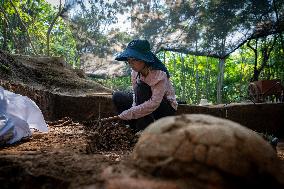
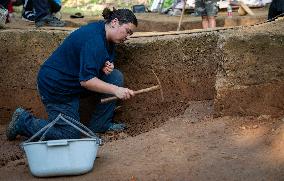
(240724) -- WUHAN, July 24, 2024 Photo by Xinhua/ABACAPRESS.COM) -- A participant from China puts pottery shreds together at an excavation site at the Panlongcheng National Archaeological Site Park in Wuhan, central China's Hubei Province, July 24, 2024. As part of Wuhan University's summer programs, the international summer school on archaeology is held at the Panlongcheng National Archaeological Site Park in Wuhan. This school offers opportunities to 9 students from home and abroad to participate in a five-week program, including lectures and field work. Photo by Xinhua/ABACAPRESS.COM/Hu Jingwen)

  •  
(Int'l Exchange)CHINA-HUBEI-WUHAN-SUMMER SCHOOL-ARCHAEOLOGY-PROGRAM (CN)

(Int'l Exchange)CHINA-HUBEI-WUHAN-SUMMER SCHOOL-ARCHAEOLOGY-PROGRAM (CN)

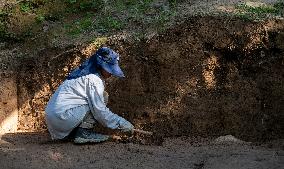
(240724) -- WUHAN, July 24, 2024 Photo by Xinhua/ABACAPRESS.COM) -- A participant from the United States works at an excavation site at the Panlongcheng National Archaeological Site Park in Wuhan, central China's Hubei Province, July 24, 2024. As part of Wuhan University's summer programs, the international summer school on archaeology is held at the Panlongcheng National Archaeological Site Park in Wuhan. This school offers opportunities to 9 students from home and abroad to participate in a five-week program, including lectures and field work. Photo by Xinhua/ABACAPRESS.COM/Hu Jingwen)

  •  
(Int'l Exchange)CHINA-HUBEI-WUHAN-SUMMER SCHOOL-ARCHAEOLOGY-PROGRAM (CN)

(Int'l Exchange)CHINA-HUBEI-WUHAN-SUMMER SCHOOL-ARCHAEOLOGY-PROGRAM (CN)

(240724) -- WUHAN, July 24, 2024 Photo by Xinhua/ABACAPRESS.COM) -- A participant from Singapore works at an excavation site at the Panlongcheng National Archaeological Site Park in Wuhan, central China's Hubei Province, July 24, 2024. As part of Wuhan University's summer programs, the international summer school on archaeology is held at the Panlongcheng National Archaeological Site Park in Wuhan. This school offers opportunities to 9 students from home and abroad to participate in a five-week program, including lectures and field work. Photo by Xinhua/ABACAPRESS.COM/Hu Jingwen)

  •  
(Int'l Exchange)CHINA-HUBEI-WUHAN-SUMMER SCHOOL-ARCHAEOLOGY-PROGRAM (CN)

(Int'l Exchange)CHINA-HUBEI-WUHAN-SUMMER SCHOOL-ARCHAEOLOGY-PROGRAM (CN)

(240724) -- WUHAN, July 24, 2024 Photo by Xinhua/ABACAPRESS.COM) -- A participant from China works at an excavation site at the Panlongcheng National Archaeological Site Park in Wuhan, central China's Hubei Province, July 24, 2024. As part of Wuhan University's summer programs, the international summer school on archaeology is held at the Panlongcheng National Archaeological Site Park in Wuhan. This school offers opportunities to 9 students from home and abroad to participate in a five-week program, including lectures and field work. Photo by Xinhua/ABACAPRESS.COM/Hu Jingwen)

  •  
(Int'l Exchange)CHINA-HUBEI-WUHAN-SUMMER SCHOOL-ARCHAEOLOGY-PROGRAM (CN)

(Int'l Exchange)CHINA-HUBEI-WUHAN-SUMMER SCHOOL-ARCHAEOLOGY-PROGRAM (CN)

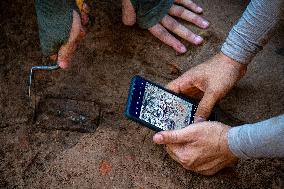
(240724) -- WUHAN, July 24, 2024 Photo by Xinhua/ABACAPRESS.COM) -- A participant from Singapore takes a photo of a bronze ware at an excavation site at the Panlongcheng National Archaeological Site Park in Wuhan, central China's Hubei Province, July 24, 2024. As part of Wuhan University's summer programs, the international summer school on archaeology is held at the Panlongcheng National Archaeological Site Park in Wuhan. This school offers opportunities to 9 students from home and abroad to participate in a five-week program, including lectures and field work. Photo by Xinhua/ABACAPRESS.COM/Hu Jingwen)

  •  
(Int'l Exchange)CHINA-HUBEI-WUHAN-SUMMER SCHOOL-ARCHAEOLOGY-PROGRAM (CN)

(Int'l Exchange)CHINA-HUBEI-WUHAN-SUMMER SCHOOL-ARCHAEOLOGY-PROGRAM (CN)

(240724) -- WUHAN, July 24, 2024 Photo by Xinhua/ABACAPRESS.COM) -- A participant from the United States works at an excavation site at the Panlongcheng National Archaeological Site Park in Wuhan, central China's Hubei Province, July 24, 2024. As part of Wuhan University's summer programs, the international summer school on archaeology is held at the Panlongcheng National Archaeological Site Park in Wuhan. This school offers opportunities to 9 students from home and abroad to participate in a five-week program, including lectures and field work. Photo by Xinhua/ABACAPRESS.COM/Hu Jingwen)

  •  
(Int'l Exchange)CHINA-HUBEI-WUHAN-SUMMER SCHOOL-ARCHAEOLOGY-PROGRAM (CN)

(Int'l Exchange)CHINA-HUBEI-WUHAN-SUMMER SCHOOL-ARCHAEOLOGY-PROGRAM (CN)

(240724) -- WUHAN, July 24, 2024 Photo by Xinhua/ABACAPRESS.COM) -- A participant from the United States works at an excavation site at the Panlongcheng National Archaeological Site Park in Wuhan, central China's Hubei Province, July 24, 2024. As part of Wuhan University's summer programs, the international summer school on archaeology is held at the Panlongcheng National Archaeological Site Park in Wuhan. This school offers opportunities to nine students from home and abroad to participate in a five-week program, including lectures and field work. Photo by Xinhua/ABACAPRESS.COM/Hu Jingwen)

  •  
BRI Stories | Ancient temple excavation gains progress by joint Egyptian-Chinese archaeological mission

BRI Stories | Ancient temple excavation gains progress by joint Egyptian-Chinese archaeological mission

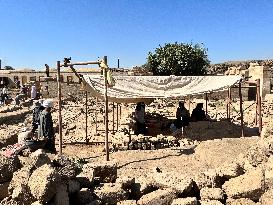
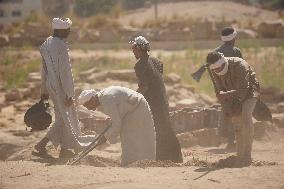
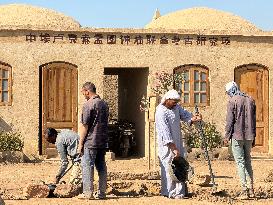
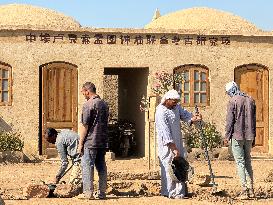
(240529) -- LUXOR, May 29, 2024 Photo by Xinhua/ABACAPRESS.COM) -- Archaeologists of a Chinese-Egyptian archaeological mission work at an excavation site of a chapel near the relic of the Montu Temple in Luxor, Egypt, on April 8, 2024. The Montu Temple, located at the Karnak Temple Complex of Egypt's monument-rich city of Luxor, was dedicated to the worship of Montu, a falcon-headed war god. Since late 2018, the first Egyptian-Chinese archaeological mission has been working seasonally at the Karnak Temple Complex, inspiring many Egyptian and Chinese experts to strengthen related cooperation. After nearly six years of joint efforts by Chinese and Egyptian archaeologists, the excavation of the once-abandoned Montu Temple, has achieved fruitful results. Photo by Xinhua/ABACAPRESS.COM/Sui Xiankai)

  •  
BRI Stories | Ancient temple excavation gains progress by joint Egyptian-Chinese archaeological mission

BRI Stories | Ancient temple excavation gains progress by joint Egyptian-Chinese archaeological mission

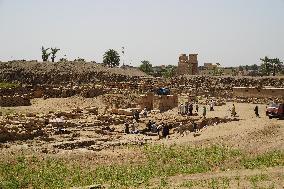
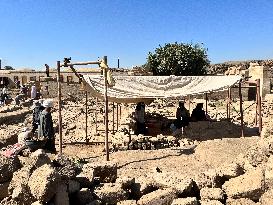
(240529) -- LUXOR, May 29, 2024 Photo by Xinhua/ABACAPRESS.COM) -- Archaeologists of a Chinese-Egyptian archaeological mission work at the excavation site of the Montu Temple in Luxor, Egypt, on May 1, 2024. The Montu Temple, located at the Karnak Temple Complex of Egypt's monument-rich city of Luxor, was dedicated to the worship of Montu, a falcon-headed war god. Since late 2018, the first Egyptian-Chinese archaeological mission has been working seasonally at the Karnak Temple Complex, inspiring many Egyptian and Chinese experts to strengthen related cooperation. After nearly six years of joint efforts by Chinese and Egyptian archaeologists, the excavation of the once-abandoned Montu Temple, has achieved fruitful results. (Egyptian-Chinese archaeological mission/Handout via Xinhua/ABACAPRESS.COM

  •  
BRI Stories | Ancient temple excavation gains progress by joint Egyptian-Chinese archaeological mission

BRI Stories | Ancient temple excavation gains progress by joint Egyptian-Chinese archaeological mission

(240529) -- LUXOR, May 29, 2024 Photo by Xinhua/ABACAPRESS.COM) -- Archaeologists of a Chinese-Egyptian archaeological mission work at the excavation site of the Montu Temple in Luxor, Egypt, on April 8, 2024. The Montu Temple, located at the Karnak Temple Complex of Egypt's monument-rich city of Luxor, was dedicated to the worship of Montu, a falcon-headed war god. Since late 2018, the first Egyptian-Chinese archaeological mission has been working seasonally at the Karnak Temple Complex, inspiring many Egyptian and Chinese experts to strengthen related cooperation. After nearly six years of joint efforts by Chinese and Egyptian archaeologists, the excavation of the once-abandoned Montu Temple, has achieved fruitful results. Photo by Xinhua/ABACAPRESS.COM/Wang Dongzhen)

  •  
BRI Stories | Ancient temple excavation gains progress by joint Egyptian-Chinese archaeological mission

BRI Stories | Ancient temple excavation gains progress by joint Egyptian-Chinese archaeological mission

(240529) -- LUXOR, May 29, 2024 Photo by Xinhua/ABACAPRESS.COM) -- Archaeologists of a Chinese-Egyptian archaeological mission work at the excavation site of the Montu Temple in Luxor, Egypt, on April 28, 2024. The Montu Temple, located at the Karnak Temple Complex of Egypt's monument-rich city of Luxor, was dedicated to the worship of Montu, a falcon-headed war god. Since late 2018, the first Egyptian-Chinese archaeological mission has been working seasonally at the Karnak Temple Complex, inspiring many Egyptian and Chinese experts to strengthen related cooperation. After nearly six years of joint efforts by Chinese and Egyptian archaeologists, the excavation of the once-abandoned Montu Temple, has achieved fruitful results. (Egyptian-Chinese archaeological mission/Handout via Xinhua/ABACAPRESS.COM

  •  
BRI Stories | Ancient temple excavation gains progress by joint Egyptian-Chinese archaeological mission

BRI Stories | Ancient temple excavation gains progress by joint Egyptian-Chinese archaeological mission

(240529) -- LUXOR, May 29, 2024 (Xinhua) -- Archaeologists of a Chinese-Egyptian archaeological mission work at the excavation site of the Montu Temple in Luxor, Egypt, on April 8, 2024. The Montu Temple, located at the Karnak Temple Complex of Egypt's monument-rich city of Luxor, was dedicated to the worship of Montu, a falcon-headed war god. Since late 2018, the first Egyptian-Chinese archaeological mission has been working seasonally at the Karnak Temple Complex, inspiring many Egyptian and Chinese experts to strengthen related cooperation. After nearly six years of joint efforts by Chinese and Egyptian archaeologists, the excavation of the once-abandoned Montu Temple, has achieved fruitful results. (Xinhua/Wang Dongzhen)

  •  
BRI Stories | Ancient temple excavation gains progress by joint Egyptian-Chinese archaeological mission

BRI Stories | Ancient temple excavation gains progress by joint Egyptian-Chinese archaeological mission

(240529) -- LUXOR, May 29, 2024 (Xinhua) -- Archaeologists of a Chinese-Egyptian archaeological mission work at an excavation site of a chapel near the relic of the Montu Temple in Luxor, Egypt, on April 8, 2024. The Montu Temple, located at the Karnak Temple Complex of Egypt's monument-rich city of Luxor, was dedicated to the worship of Montu, a falcon-headed war god. Since late 2018, the first Egyptian-Chinese archaeological mission has been working seasonally at the Karnak Temple Complex, inspiring many Egyptian and Chinese experts to strengthen related cooperation. After nearly six years of joint efforts by Chinese and Egyptian archaeologists, the excavation of the once-abandoned Montu Temple, has achieved fruitful results. (Xinhua/Sui Xiankai)

  •  

Joint China-Central Asia archaeological work on ancient Silk Road yields results

STORY: Joint China-Central Asia archaeological work on ancient Silk Road yields results SHOOTING TIME: May 25, 2024 DATELINE: May 26, 2024 LENGTH: 0:00:45 LOCATION: XI'AN, China CATEGORY: SOCIETY SHOTLIST: 1. various of archaeological excavation sites 2. SOUNDBTIE (Chinese): TANG YUNPENG, Lecturer from Northwest University, China STORYLINE: Since 2009, the Central Asia archaeological team from Northwest University in China has cooperated with Central Asian countries to carry out archaeological excavations for more than 70 times. During the excavations, important ruins such as the Sazagan Ruins and the Rabat Ruins were excavated, and important cultural relics of ancient people such as those in Yuezhi and Kangju were identified. The excavation findings have provided empirical evidence and scientific basis for elucidating the history of the ancient Silk Road, and important efforts have been made to restore the historical sites along the ancient Silk Road. SOUNDBTIE (Chinese): TANG YUNPENG, Lecturer from

  •  

Tomb excavation in China's Anhui yields major discoveries

STORY: Tomb excavation in China's Anhui yields major discoveries SHOOTING TIME: April 17, 2024 DATELINE: May 19, 2024 LENGTH: 00:00:31 LOCATION: HUAINAN, China CATEGORY: CULTURE SHOTLIST: 1. various of the Wuwangdun tomb excavation site 2. various of the relics STORYLINE: The archaeological excavation at the Wuwangdun tomb in east China's Anhui Province has yielded major findings, unearthing over 3,000 cultural relics, according to China's cultural heritage administration. Earlier this year, the National Cultural Heritage Administration (NCHA) confirmed the Wuwangdun tomb as the largest and highest-level tomb of the ancient Chu state, which existed more than 2,200 years ago during the Warring States Period (475 BC-221 BC). According to the administration, the excavation of four side chambers to the north and west of the central burial chamber has been completed, while work on two additional chambers to the south and east is currently underway. Relics recovered from the northern chambers mostly consisted

  •  
XINHUA PHOTOS OF THE DAY

XINHUA PHOTOS OF THE DAY

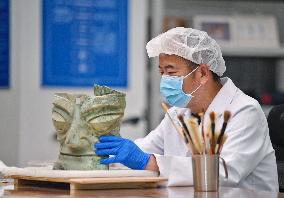
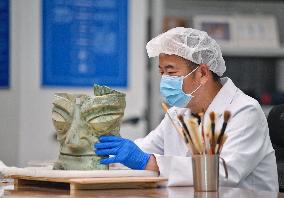
(240502) -- BEIJING, May 2, 2024 (Xinhua) -- Guo Hanzhong cleans a bronze mask at Sanxingdui Museum in Guanghan City, southwest China's Sichuan Province, April 25, 2024. Guo Hanzhong is the vice head of the cultural relics storage department of the Sanxingdui Museum in southwest China's Sichuan Province. The 56-year-old man is skilled in the craft of restoring cultural relics. In the past 40 years, he has restored more than 6,000 cultural relic items and was deeply involved in the excavation of all the eight "sacrificial pits" found at Sanxingdui Ruins site. After the completion of the field work in the Sanxingdui Ruins site, sorting, protection and restoration of newly unearthed cultural relics have become the most important work in the current research. "There are probably tens of thousands of relics waiting to be restored, and I can't finish the job in my generation. It needs to be done from generation to generation," Guo Hanzhong said, "Repairing cultural relics needs experience. And I will try my b

  •  
CHINA-SICHUAN-SANXINGDUI-CULTURAL RELIC RESTORER (CN)

CHINA-SICHUAN-SANXINGDUI-CULTURAL RELIC RESTORER (CN)

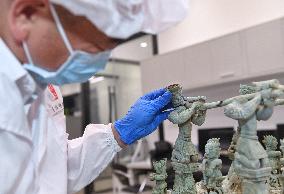
(240501) -- CHENGDU, May 1, 2024 (Xinhua) -- Guo Hanzhong compares two parts of a figure on a bronze altar at Sanxingdui Museum in Guanghan City, southwest China's Sichuan Province, May 30, 2023. Guo Hanzhong is the vice head of the cultural relics storage department of the Sanxingdui Museum in southwest China's Sichuan Province. The 56-year-old man is skilled in the craft of restoring cultural relics. In the past 40 years, he has restored more than 6,000 cultural relic items and was deeply involved in the excavation of all the eight "sacrificial pits" found at Sanxingdui Ruins site. After the completion of the field work in the Sanxingdui Ruins site, sorting, protection and restoration of newly unearthed cultural relics have become the most important work in the current research. "There are probably tens of thousands of relics waiting to be restored, and I can't finish the job in my generation. It needs to be done from generation to generation," Guo Hanzhong said, "Repairing cultural relics needs exper

  •  
CHINA-SICHUAN-SANXINGDUI-CULTURAL RELIC RESTORER (CN)

CHINA-SICHUAN-SANXINGDUI-CULTURAL RELIC RESTORER (CN)

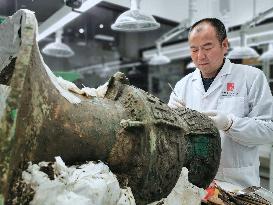
(240501) -- CHENGDU, May 1, 2024 (Xinhua) -- This file photo taken in March 2022 shows Guo Hanzhong cleaning a bronze vessel at Sanxingdui Museum in Guanghan City, southwest China's Sichuan Province. Guo Hanzhong is the vice head of the cultural relics storage department of the Sanxingdui Museum in southwest China's Sichuan Province. The 56-year-old man is skilled in the craft of restoring cultural relics. In the past 40 years, he has restored more than 6,000 cultural relic items and was deeply involved in the excavation of all the eight "sacrificial pits" found at Sanxingdui Ruins site. After the completion of the field work in the Sanxingdui Ruins site, sorting, protection and restoration of newly unearthed cultural relics have become the most important work in the current research. "There are probably tens of thousands of relics waiting to be restored, and I can't finish the job in my generation. It needs to be done from generation to generation," Guo Hanzhong said, "Repairing cultural relics needs e

  •  
CHINA-SICHUAN-SANXINGDUI-CULTURAL RELIC RESTORER (CN)

CHINA-SICHUAN-SANXINGDUI-CULTURAL RELIC RESTORER (CN)

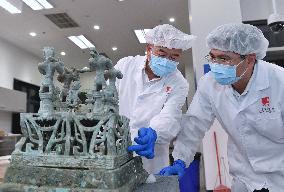
(240501) -- CHENGDU, May 1, 2024 (Xinhua) -- Guo Hanzhong (L) discusses the restoration plan of a bronze altar with his colleague at Sanxingdui Museum in Guanghan City, southwest China's Sichuan Province, May 30, 2023. Guo Hanzhong is the vice head of the cultural relics storage department of the Sanxingdui Museum in southwest China's Sichuan Province. The 56-year-old man is skilled in the craft of restoring cultural relics. In the past 40 years, he has restored more than 6,000 cultural relic items and was deeply involved in the excavation of all the eight "sacrificial pits" found at Sanxingdui Ruins site. After the completion of the field work in the Sanxingdui Ruins site, sorting, protection and restoration of newly unearthed cultural relics have become the most important work in the current research. "There are probably tens of thousands of relics waiting to be restored, and I can't finish the job in my generation. It needs to be done from generation to generation," Guo Hanzhong said, "Repairing cult

  •  
CHINA-SICHUAN-SANXINGDUI-CULTURAL RELIC RESTORER (CN)

CHINA-SICHUAN-SANXINGDUI-CULTURAL RELIC RESTORER (CN)

(240501) -- CHENGDU, May 1, 2024 (Xinhua) -- Guo Hanzhong cleans a bronze mask at Sanxingdui Museum in Guanghan City, southwest China's Sichuan Province, April 25, 2024. Guo Hanzhong is the vice head of the cultural relics storage department of the Sanxingdui Museum in southwest China's Sichuan Province. The 56-year-old man is skilled in the craft of restoring cultural relics. In the past 40 years, he has restored more than 6,000 cultural relic items and was deeply involved in the excavation of all the eight "sacrificial pits" found at Sanxingdui Ruins site. After the completion of the field work in the Sanxingdui Ruins site, sorting, protection and restoration of newly unearthed cultural relics have become the most important work in the current research. "There are probably tens of thousands of relics waiting to be restored, and I can't finish the job in my generation. It needs to be done from generation to generation," Guo Hanzhong said, "Repairing cultural relics needs experience. And I will try my b

  •  
CHINA-SICHUAN-SANXINGDUI-CULTURAL RELIC RESTORER (CN)

CHINA-SICHUAN-SANXINGDUI-CULTURAL RELIC RESTORER (CN)

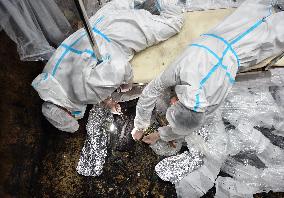
(240501) -- CHENGDU, May 1, 2024 (Xinhua) -- Guo Hanzhong (L) excavates an ivory with his colleague at the sacrificial pit No. 4 of the Sanxingdui Ruins site in Guanghan City, southwest China's Sichuan Province, April 15, 2021. Guo Hanzhong is the vice head of the cultural relics storage department of the Sanxingdui Museum in southwest China's Sichuan Province. The 56-year-old man is skilled in the craft of restoring cultural relics. In the past 40 years, he has restored more than 6,000 cultural relic items and was deeply involved in the excavation of all the eight "sacrificial pits" found at Sanxingdui Ruins site. After the completion of the field work in the Sanxingdui Ruins site, sorting, protection and restoration of newly unearthed cultural relics have become the most important work in the current research. "There are probably tens of thousands of relics waiting to be restored, and I can't finish the job in my generation. It needs to be done from generation to generation," Guo Hanzhong said, "Repai

  •  
CHINA-SICHUAN-SANXINGDUI-CULTURAL RELIC RESTORER (CN)

CHINA-SICHUAN-SANXINGDUI-CULTURAL RELIC RESTORER (CN)

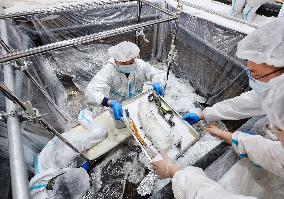
(240501) -- CHENGDU, May 1, 2024 (Xinhua) -- Guo Hanzhong (C) passes an ivory to his colleagues at the sacrificial pit No. 4 of the Sanxingdui Ruins site in Guanghan City, southwest China's Sichuan Province, April 15, 2021. Guo Hanzhong is the vice head of the cultural relics storage department of the Sanxingdui Museum in southwest China's Sichuan Province. The 56-year-old man is skilled in the craft of restoring cultural relics. In the past 40 years, he has restored more than 6,000 cultural relic items and was deeply involved in the excavation of all the eight "sacrificial pits" found at Sanxingdui Ruins site. After the completion of the field work in the Sanxingdui Ruins site, sorting, protection and restoration of newly unearthed cultural relics have become the most important work in the current research. "There are probably tens of thousands of relics waiting to be restored, and I can't finish the job in my generation. It needs to be done from generation to generation," Guo Hanzhong said, "Repairing

  •  
CHINA-SICHUAN-SANXINGDUI-CULTURAL RELIC RESTORER (CN)

CHINA-SICHUAN-SANXINGDUI-CULTURAL RELIC RESTORER (CN)

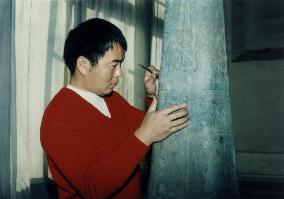
(240501) -- CHENGDU, May 1, 2024 (Xinhua) -- This file photo taken in 1997 shows Guo Hanzhong cleaning a bronze standing figure. Guo Hanzhong is the vice head of the cultural relics storage department of the Sanxingdui Museum in southwest China's Sichuan Province. The 56-year-old man is skilled in the craft of restoring cultural relics. In the past 40 years, he has restored more than 6,000 cultural relic items and was deeply involved in the excavation of all the eight "sacrificial pits" found at Sanxingdui Ruins site. After the completion of the field work in the Sanxingdui Ruins site, sorting, protection and restoration of newly unearthed cultural relics have become the most important work in the current research. "There are probably tens of thousands of relics waiting to be restored, and I can't finish the job in my generation. It needs to be done from generation to generation," Guo Hanzhong said, "Repairing cultural relics needs experience. And I will try my best to pass on what I have learned to you

  •  
CHINA-SICHUAN-SANXINGDUI-CULTURAL RELIC RESTORER (CN)

CHINA-SICHUAN-SANXINGDUI-CULTURAL RELIC RESTORER (CN)

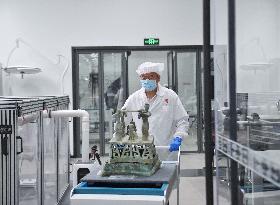
(240501) -- CHENGDU, May 1, 2024 (Xinhua) -- Guo Hanzhong takes out a bronze altar at Sanxingdui Museum in Guanghan City, southwest China's Sichuan Province, May 30, 2023. Guo Hanzhong is the vice head of the cultural relics storage department of the Sanxingdui Museum in southwest China's Sichuan Province. The 56-year-old man is skilled in the craft of restoring cultural relics. In the past 40 years, he has restored more than 6,000 cultural relic items and was deeply involved in the excavation of all the eight "sacrificial pits" found at Sanxingdui Ruins site. After the completion of the field work in the Sanxingdui Ruins site, sorting, protection and restoration of newly unearthed cultural relics have become the most important work in the current research. "There are probably tens of thousands of relics waiting to be restored, and I can't finish the job in my generation. It needs to be done from generation to generation," Guo Hanzhong said, "Repairing cultural relics needs experience. And I will try my

  •  
CHINA-SICHUAN-SANXINGDUI-CULTURAL RELIC RESTORER (CN)

CHINA-SICHUAN-SANXINGDUI-CULTURAL RELIC RESTORER (CN)

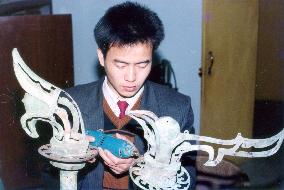
(240501) -- CHENGDU, May 1, 2024 (Xinhua) -- This file photo taken in 1990 shows Guo Hanzhong restoring a bronze sacred tree. Guo Hanzhong is the vice head of the cultural relics storage department of the Sanxingdui Museum in southwest China's Sichuan Province. The 56-year-old man is skilled in the craft of restoring cultural relics. In the past 40 years, he has restored more than 6,000 cultural relic items and was deeply involved in the excavation of all the eight "sacrificial pits" found at Sanxingdui Ruins site. After the completion of the field work in the Sanxingdui Ruins site, sorting, protection and restoration of newly unearthed cultural relics have become the most important work in the current research. "There are probably tens of thousands of relics waiting to be restored, and I can't finish the job in my generation. It needs to be done from generation to generation," Guo Hanzhong said, "Repairing cultural relics needs experience. And I will try my best to pass on what I have learned to younge

  •  
CHINA-SICHUAN-SANXINGDUI-CULTURAL RELIC RESTORER (CN)

CHINA-SICHUAN-SANXINGDUI-CULTURAL RELIC RESTORER (CN)

(240501) -- CHENGDU, May 1, 2024 (Xinhua) -- Guo Hanzhong prepares cleaning tools at Sanxingdui Museum in Guanghan City, southwest China's Sichuan Province, April 25, 2024. Guo Hanzhong is the vice head of the cultural relics storage department of the Sanxingdui Museum in southwest China's Sichuan Province. The 56-year-old man is skilled in the craft of restoring cultural relics. In the past 40 years, he has restored more than 6,000 cultural relic items and was deeply involved in the excavation of all the eight "sacrificial pits" found at Sanxingdui Ruins site. After the completion of the field work in the Sanxingdui Ruins site, sorting, protection and restoration of newly unearthed cultural relics have become the most important work in the current research. "There are probably tens of thousands of relics waiting to be restored, and I can't finish the job in my generation. It needs to be done from generation to generation," Guo Hanzhong said, "Repairing cultural relics needs experience. And I will try m

  •  
XINHUA PHOTOS OF THE DAY

XINHUA PHOTOS OF THE DAY

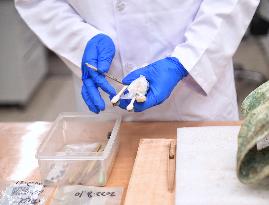
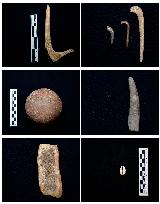
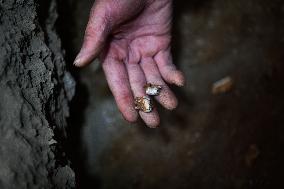
(240126) -- BEIJING, Jan. 26, 2024 (Xinhua) -- This photo taken on Jan. 24, 2024 shows archaeological samples unearthed from Chuandong Site in Puding County, southwest China's Guizhou Province. Large quantities of artifacts made of stone, bone and horn have been unearthed at Chuandong Site in Puding County, southwest China's Guizhou Province, indicating prehistoric human activity dating back more than 55,000 years. Chuandong Site, first discovered in 1978, is believed to have existed across the end of the middle Paleolithic Period, the late Paleolithic Period and the Neolithic Age. Over two years of excavation work, the third one since 1978, researchers discovered a new soil layer at the site, where they found more than 100,000 animal bones, over 10,000 pieces of earthenware and stoneware, and more than 2,500 items made of bone or horn. (Xinhua/Yang Wenbin)

  •  
CHINA-GUIZHOU-PUDING-CHUANDONG SITE-NEW FINDING (CN)

CHINA-GUIZHOU-PUDING-CHUANDONG SITE-NEW FINDING (CN)

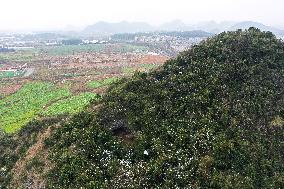
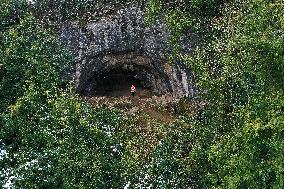
(240125) -- PUDING, Jan. 25, 2024 (Xinhua) -- An aerial drone photo taken on Jan. 24, 2024 shows a view of Chuandong Site in Puding County, southwest China's Guizhou Province. Large quantities of artifacts made of stone, bone and horn have been unearthed at Chuandong Site in Puding County, southwest China's Guizhou Province, indicating prehistoric human activity dating back more than 55,000 years. Chuandong Site, first discovered in 1978, is believed to have existed across the end of the middle Paleolithic Period, the late Paleolithic Period and the Neolithic Age. Over two years of excavation work, the third one since 1978, researchers discovered a new soil layer at the site, where they found more than 100,000 animal bones, over 10,000 pieces of earthenware and stoneware, and more than 2,500 items made of bone or horn. (Xinhua/Yang Wenbin)

  •  
CHINA-GUIZHOU-PUDING-CHUANDONG SITE-NEW FINDING (CN)

CHINA-GUIZHOU-PUDING-CHUANDONG SITE-NEW FINDING (CN)

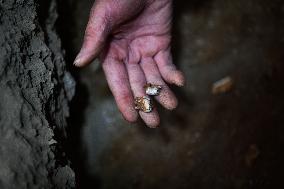
(240125) -- PUDING, Jan. 25, 2024 (Xinhua) -- This combo photo taken on Jan. 24, 2024 shows archaeological samples unearthed from Chuandong Site in Puding County, southwest China's Guizhou Province. Large quantities of artifacts made of stone, bone and horn have been unearthed at Chuandong Site in Puding County, southwest China's Guizhou Province, indicating prehistoric human activity dating back more than 55,000 years. Chuandong Site, first discovered in 1978, is believed to have existed across the end of the middle Paleolithic Period, the late Paleolithic Period and the Neolithic Age. Over two years of excavation work, the third one since 1978, researchers discovered a new soil layer at the site, where they found more than 100,000 animal bones, over 10,000 pieces of earthenware and stoneware, and more than 2,500 items made of bone or horn. (Xinhua/Yang Wenbin)

  •  
CHINA-GUIZHOU-PUDING-CHUANDONG SITE-NEW FINDING (CN)

CHINA-GUIZHOU-PUDING-CHUANDONG SITE-NEW FINDING (CN)

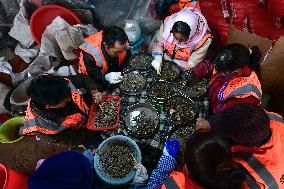
(240125) -- PUDING, Jan. 25, 2024 (Xinhua) -- Workers sort findings unearthed from Chuandong Site in Puding County, southwest China's Guizhou Province, Jan. 24, 2024. Large quantities of artifacts made of stone, bone and horn have been unearthed at Chuandong Site in Puding County, southwest China's Guizhou Province, indicating prehistoric human activity dating back more than 55,000 years. Chuandong Site, first discovered in 1978, is believed to have existed across the end of the middle Paleolithic Period, the late Paleolithic Period and the Neolithic Age. Over two years of excavation work, the third one since 1978, researchers discovered a new soil layer at the site, where they found more than 100,000 animal bones, over 10,000 pieces of earthenware and stoneware, and more than 2,500 items made of bone or horn. (Xinhua/Yang Wenbin)

  •  
CHINA-GUIZHOU-PUDING-CHUANDONG SITE-NEW FINDING (CN)

CHINA-GUIZHOU-PUDING-CHUANDONG SITE-NEW FINDING (CN)

(240125) -- PUDING, Jan. 25, 2024 (Xinhua) -- This photo taken on Jan. 24, 2024 shows archaeological samples unearthed from Chuandong Site in Puding County, southwest China's Guizhou Province. Large quantities of artifacts made of stone, bone and horn have been unearthed at Chuandong Site in Puding County, southwest China's Guizhou Province, indicating prehistoric human activity dating back more than 55,000 years. Chuandong Site, first discovered in 1978, is believed to have existed across the end of the middle Paleolithic Period, the late Paleolithic Period and the Neolithic Age. Over two years of excavation work, the third one since 1978, researchers discovered a new soil layer at the site, where they found more than 100,000 animal bones, over 10,000 pieces of earthenware and stoneware, and more than 2,500 items made of bone or horn. (Xinhua/Yang Wenbin)

  •  
CHINA-GUIZHOU-PUDING-CHUANDONG SITE-NEW FINDING (CN)

CHINA-GUIZHOU-PUDING-CHUANDONG SITE-NEW FINDING (CN)

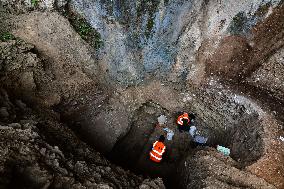
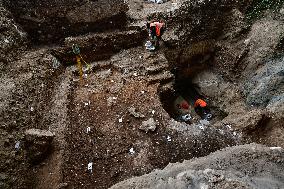
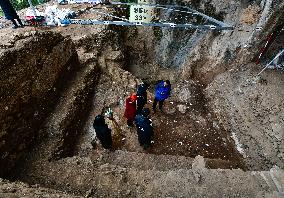
(240125) -- PUDING, Jan. 25, 2024 (Xinhua) -- Staff members conduct work at Chuandong Site in Puding County, southwest China's Guizhou Province, Jan. 24, 2024. Large quantities of artifacts made of stone, bone and horn have been unearthed at Chuandong Site in Puding County, southwest China's Guizhou Province, indicating prehistoric human activity dating back more than 55,000 years. Chuandong Site, first discovered in 1978, is believed to have existed across the end of the middle Paleolithic Period, the late Paleolithic Period and the Neolithic Age. Over two years of excavation work, the third one since 1978, researchers discovered a new soil layer at the site, where they found more than 100,000 animal bones, over 10,000 pieces of earthenware and stoneware, and more than 2,500 items made of bone or horn. (Xinhua/Yang Wenbin)

  •  
CHINA-GUIZHOU-PUDING-CHUANDONG SITE-NEW FINDING (CN)

CHINA-GUIZHOU-PUDING-CHUANDONG SITE-NEW FINDING (CN)

(240125) -- PUDING, Jan. 25, 2024 (Xinhua) -- An aerial drone photo taken on Jan. 24, 2024 shows a view of Chuandong Site in Puding County, southwest China's Guizhou Province. Large quantities of artifacts made of stone, bone and horn have been unearthed at Chuandong Site in Puding County, southwest China's Guizhou Province, indicating prehistoric human activity dating back more than 55,000 years. Chuandong Site, first discovered in 1978, is believed to have existed across the end of the middle Paleolithic Period, the late Paleolithic Period and the Neolithic Age. Over two years of excavation work, the third one since 1978, researchers discovered a new soil layer at the site, where they found more than 100,000 animal bones, over 10,000 pieces of earthenware and stoneware, and more than 2,500 items made of bone or horn. (Xinhua/Yang Wenbin)

  •  
CHINA-GUIZHOU-PUDING-CHUANDONG SITE-NEW FINDING (CN)

CHINA-GUIZHOU-PUDING-CHUANDONG SITE-NEW FINDING (CN)

(240125) -- PUDING, Jan. 25, 2024 (Xinhua) -- Staff members conduct work at Chuandong Site in Puding County, southwest China's Guizhou Province, Jan. 24, 2024. Large quantities of artifacts made of stone, bone and horn have been unearthed at Chuandong Site in Puding County, southwest China's Guizhou Province, indicating prehistoric human activity dating back more than 55,000 years. Chuandong Site, first discovered in 1978, is believed to have existed across the end of the middle Paleolithic Period, the late Paleolithic Period and the Neolithic Age. Over two years of excavation work, the third one since 1978, researchers discovered a new soil layer at the site, where they found more than 100,000 animal bones, over 10,000 pieces of earthenware and stoneware, and more than 2,500 items made of bone or horn. (Xinhua/Yang Wenbin)

  •  
CHINA-GUIZHOU-PUDING-CHUANDONG SITE-NEW FINDING (CN)

CHINA-GUIZHOU-PUDING-CHUANDONG SITE-NEW FINDING (CN)

(240125) -- PUDING, Jan. 25, 2024 (Xinhua) -- Archaeological expert and students discuss at Chuandong Site in Puding County, southwest China's Guizhou Province, Jan. 24, 2024. Large quantities of artifacts made of stone, bone and horn have been unearthed at Chuandong Site in Puding County, southwest China's Guizhou Province, indicating prehistoric human activity dating back more than 55,000 years. Chuandong Site, first discovered in 1978, is believed to have existed across the end of the middle Paleolithic Period, the late Paleolithic Period and the Neolithic Age. Over two years of excavation work, the third one since 1978, researchers discovered a new soil layer at the site, where they found more than 100,000 animal bones, over 10,000 pieces of earthenware and stoneware, and more than 2,500 items made of bone or horn. (Xinhua/Yang Wenbin)

  • Main
  • Top
  • Editorial
  • Creative
  • About Us
  • About ILG
  • Terms of use
  • Company
  • BEHIND
  • Price List
  • Single Plan
  • Monthly Plan
  • Services
  • Shooting
  • Rights Clearance
  • Support
  • FAQ
  • How To Buy
  • Contact Us
  • Become a Partner

© KYODO NEWS IMAGES INC

All Rights Reserved.

  • Editorial
  • Olympics
  • News
  • Sports
  • Japan
  • Tech
  • Royal
  • Disaster
  • NorthKorea
  • Old Japan
  • SNS
  • Creative
  • Food
  • Japan
  • Landscape
  • Animal
  • Popular
  • #Ukraine
  • #Russia
  • #coronavirus
  • #N. Korea
  • #China
  • #Thailand
  • #Ukraine
  • #Russia
  • #coronavirus
  • #N. Korea
  • #China
  • #Thailand
  • Food
  • Japan
  • Landscape
  • Animal
  • Olympics
  • News
  • Sports
  • Japan
  • Tech
  • Royal
  • Disaster
  • NorthKorea
  • Old Japan
  • SNS